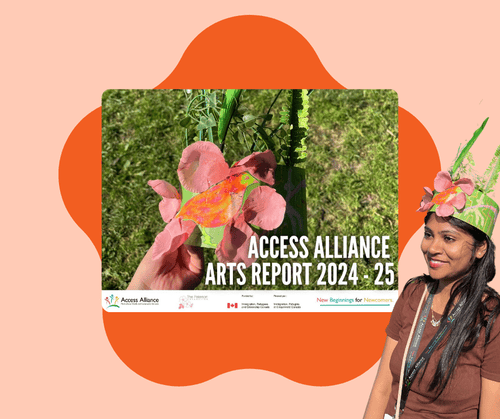
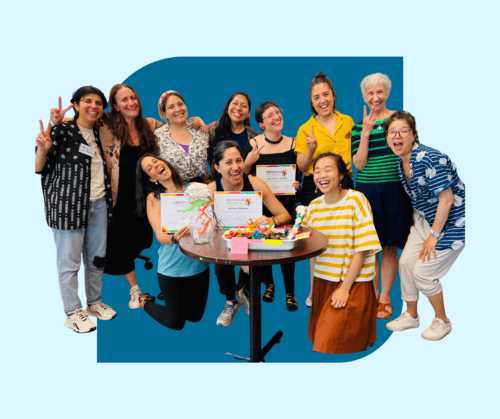
Community ambassadors and peer workers play a key role in reaching communities on the ground. To support their work, Access Alliance offered a two-day Mental Health Training using arts-based practices to three teams: Community Health Ambassadors, Family Well-being Ambassadors, and peer community outreach workers. The training took place on August 6 and 13, 2025, at Access Point on Danforth and was facilitated by a health promoter, a community health worker, and a student placement. This report presents feedback from the 11 attendees who participated in the training.
Training Objectives
Respond effectively and safely to disclosures of violence. Learn to recognize signs of abuse and provide immediate, compassionate support while ensuring safety and confidentiality. Participants will develop skills to respond appropriately and connect clients with relevant resources.
Apply core principles of brief counselling in client interactions. Gain practical strategies for short-term, solution-focused support that empowers clients. This includes active listening, goal-setting, and facilitating meaningful dialogue in a supportive environment.
Recognize when to seek support and strengthen professional networks. Understand the importance of collaboration and knowing your limits. Participants will learn how to identify situations requiring additional expertise and how to access and maintain professional support networks.
Support clients navigating grief and loss with sensitivity and care. Explore strategies for providing empathetic support to individuals coping with personal loss or trauma. Emphasis is placed on active listening, validation, and culturally responsive approaches.
Assist caregivers experiencing stress or burnout with appropriate strategies. Learn to identify signs of caregiver fatigue and offer practical coping tools. Training emphasizes building resilience and promoting well-being among those who support others.
Promote trust, healing, and strong peer and community relationships. Develop skills to foster safe, supportive connections that encourage collaboration and mutual care. Participants will explore ways to strengthen both individual and community resilience.
Practice self-regulation and co-regulation techniques to reduce stress. Gain practical strategies for managing personal stress and supporting others in regulating emotions. Training highlights mindfulness, reflection, and evidence-based techniques to maintain well-being in challenging environments.