By Lana Cho, Community health worker
What colours remind you of home? What smells bring back comforting memories? What tastes make you feel warm and grounded?
Smells of deep golden turmeric, warm sweet cinnamon, fresh hints of mint, and fragrant roses welcome each participant who attends the Colours of the Earth program at Access Point on Danforth. The program is led by newcomer community artist Mercy Verdugo, a multidisciplinary artist with over two decades of experience across visual art, performance, poetry, and community facilitation. Her practice spans diverse settings from the Mexican jungle, where she collaborated with immigrant children and families, to Toronto, where she leads workshops for seniors and women with lived refugee experiences.
Colours of the Earth emerged in response to a common barrier identified across many arts programs: traditional art materials are often expensive and inaccessible. Mercy was invited to offer a different approach, teaching participants how to create natural pigments using ingredients found in their own kitchens and homes. By making their own art materials, participants developed practical skills and confidence, empowering them to continue creating art at home with their families using materials they already had.
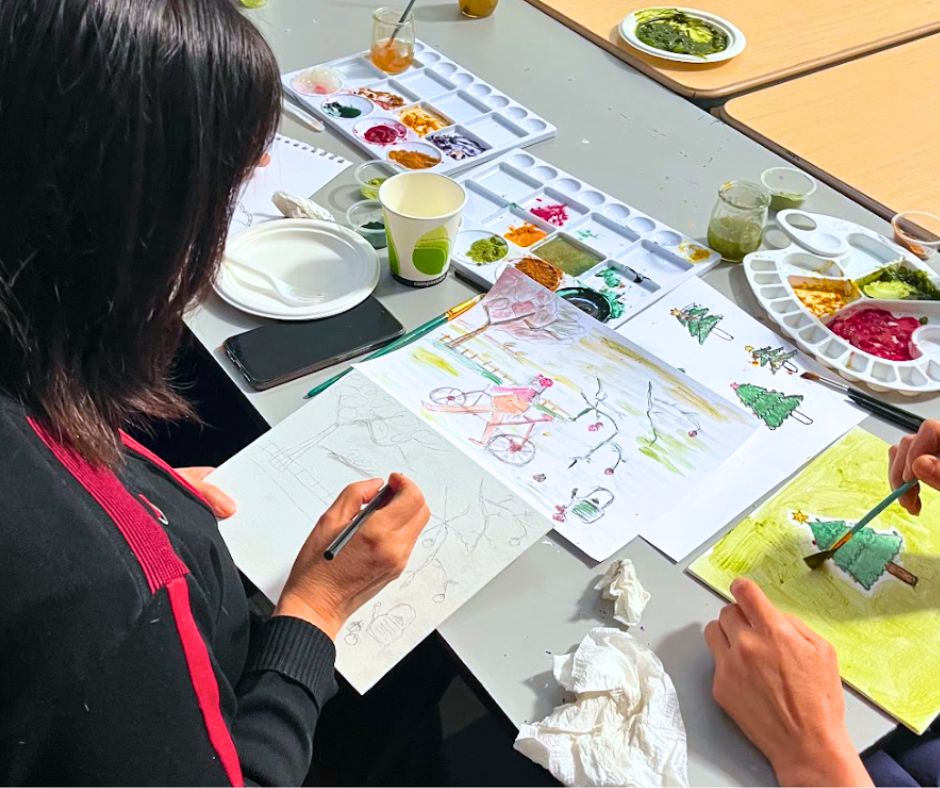
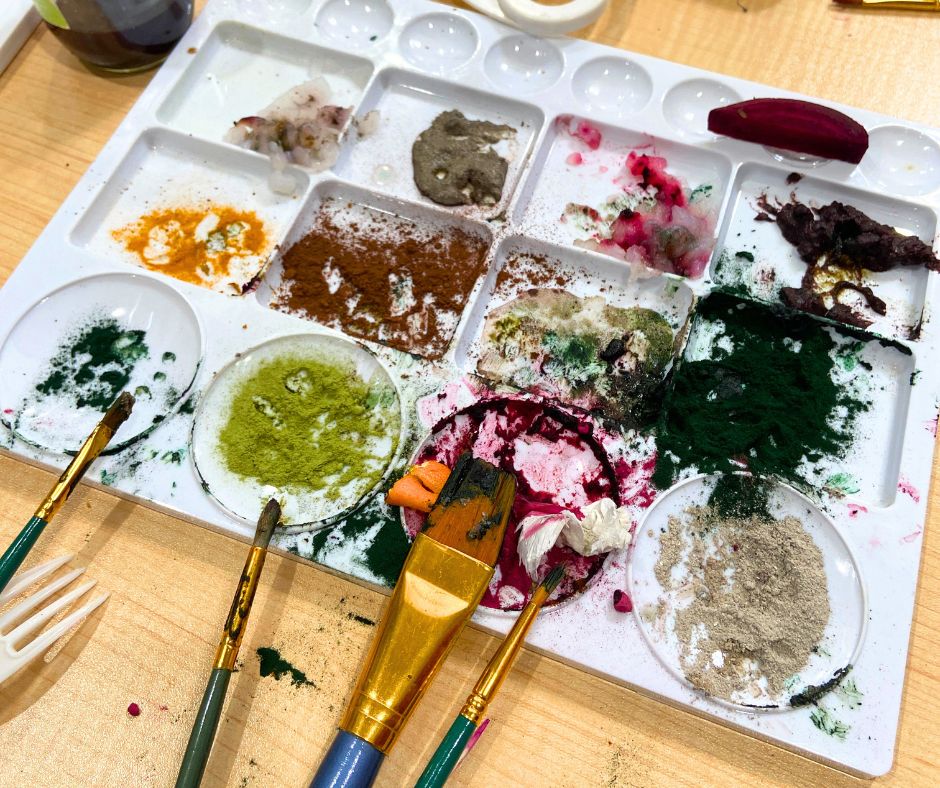
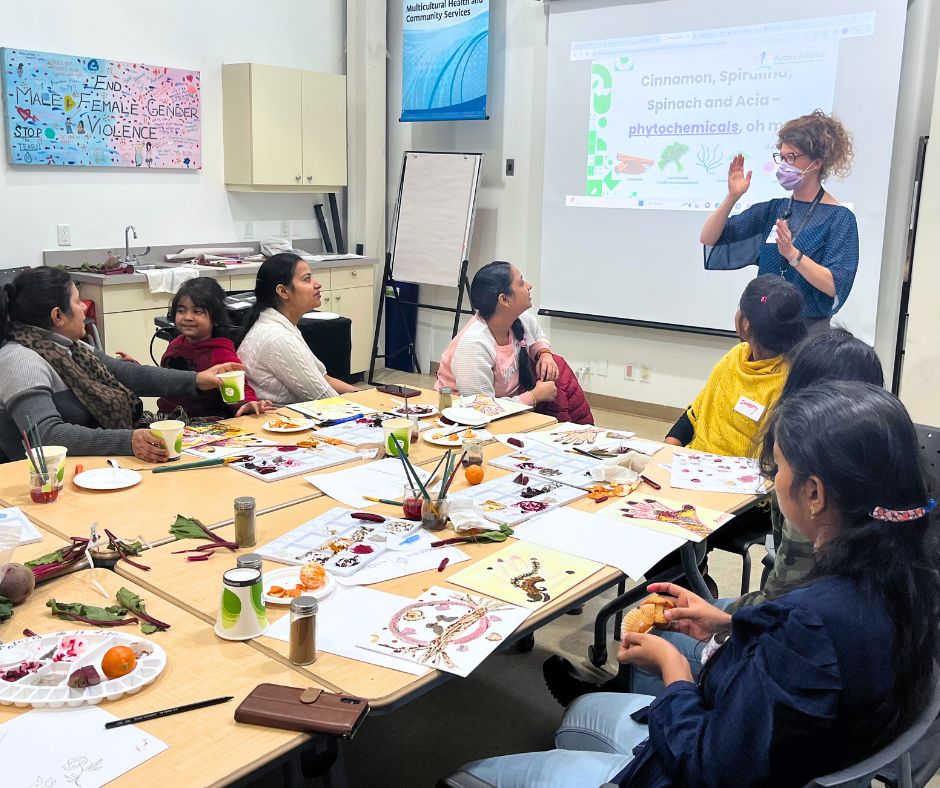
Participants created natural pigments using spices and foods such as turmeric, chocolate, coffee, beets, mint, and roses. Before any brush touched the paper or canvases, Mercy invited everyone to engage their senses smelling the herbs and foods, sharing memories, and reflecting on the colours, tastes, and traditions that connect them to home.
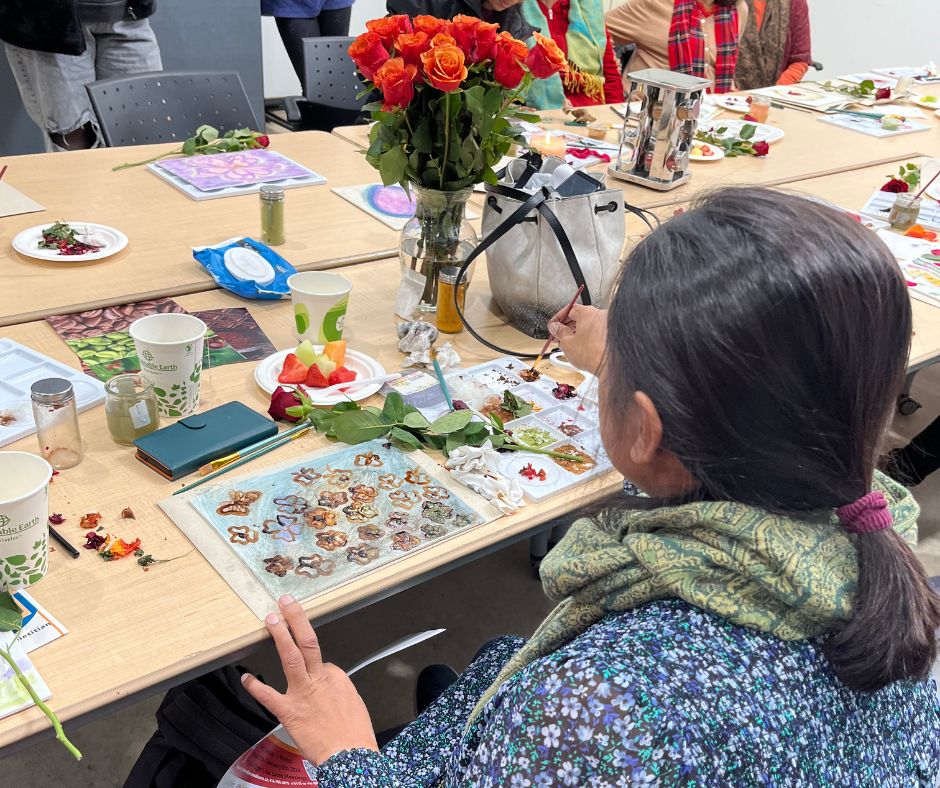
Over the six weeks, dieticians from Access Alliance added a unique ingredient to the program: knowledge. They shared insights on nutrition, the benefits of the herbs and foods participants were working with, and offered themselves as a trusted resource. Participants not only learned about healthy eating and how everyday ingredients can support wellbeing, but also experienced a program that was both creative and educational.
Combining arts engagement with healthcare knowledge proved highly effective. By the end of the program, participants reported a greater curiosity about mental health and wellbeing. Many also noted the new connections they had made, as well as the strengthening of existing relationships. Several expressed a desire for more holistic programs that blend creative activities with learning about health and wellbeing, highlighting the value of this integrated approach.
As participants mixed pigments and new hues of smells danced around the room, many also shared in storytelling. Participants reminisced about cooking with family, making curries, and about the many herbs passed on inter-generationally in their families. The familiar scents fostered conversations about beloved hometowns, kitchen happenings, and meals that carried a legacy across borders.
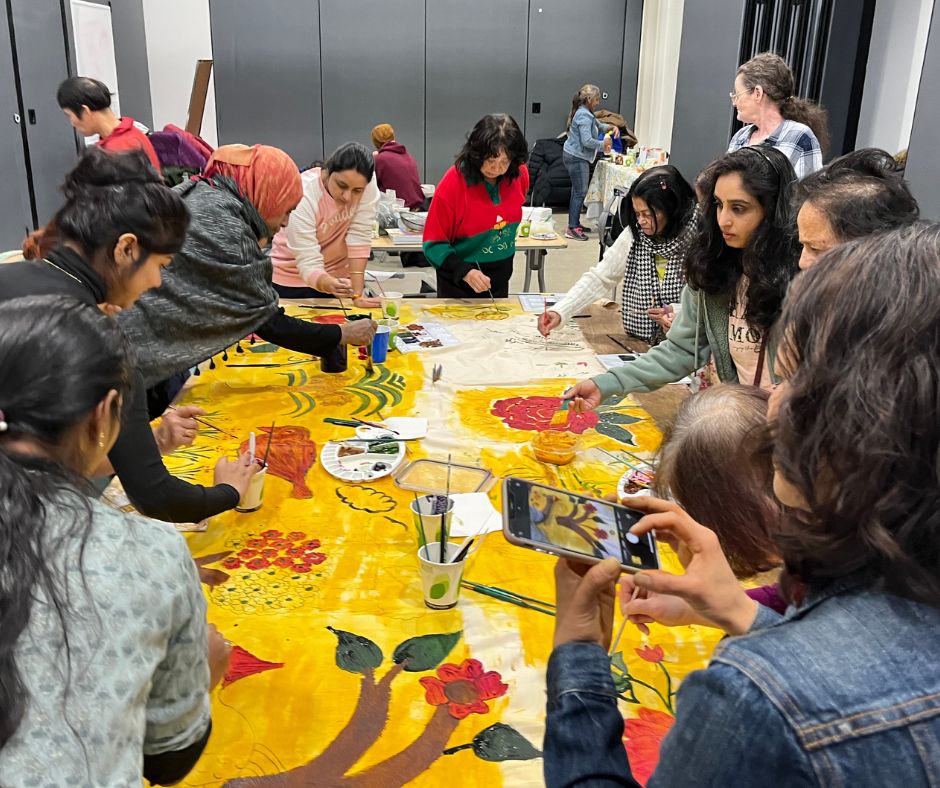
For the final gathering, the group gathered around a large shared canvas, bringing with them all the ingredients and techniques they had learned along the way. Standing shoulder to shoulder, participants began at the edges, gently spreading turmeric across the surface, watching the canvas slowly turn golden beneath their hands. As the mural grew, layers of chocolate brown, beet red, and soft mint emerged, blending into one another. Together, these colours formed landscapes shaped by memory places participants had once called home, places they still carried with them. The mural became not just a final artwork, but a collective reflection of shared stories, presence, and a journey of herbs through their lives.
Colours of the Earth became much more than a program. It empowered newcomer women to create art using accessible materials, connect with their families, preserve cultural stories, and discover something new about nutrition and healthy eating. Through making, sharing, and experimenting, participants transformed everyday ingredients into vibrant expressions of home, heritage, and imagination.
Learn about expressive arts programs: https://accessalliance.ca/programs-services/community-programs/