By George Fazaa, MA candidate in clinical & counselling psychology
Newcomers often arrive in Canada carrying more than just their luggage. Many come with experiences of forced displacement, exposure to violence, loss of community, uncertain immigration statuses, and the ongoing struggles of resettlement. These experiences shape mental health in ways that often go unrecognized. Trauma rarely presents itself as a neat “mental health problem.” More often, it shows up as sleepless nights, a restless body, irritability that feels out of character, or emotional numbness that resembles withdrawal.
Trauma-informed practice alters our understanding of these experiences. Rather than asking, “What is wrong with you?” it asks, “What happened to you?” and “What did your mind and body have to do to survive?” (Frankl, 1987; Malchiodi, 2023). When trauma-informed distress is unrecognized or unsupported, it can prevent newcomer individuals and communities from accessing needed services or resources, thereby worsening their mental health.
Expressive art approaches implement a combination of visual arts, music, movement, storytelling, drama, enactment, and creative writing, etc. These approaches offer a practical and accessible way to respond to trauma and are well-suited for newcomers because they do not require strong linguistic proficiency or clinical expertise. They support healing while also respecting privacy, choice, culture, and lived experience. Group-based interventions, such as expressive arts, provide a practical approach to trauma-informed work at the early stages of settlement, when language, safety, trust, and a sense of belonging are still being rebuilt (Malchiodi, 2020).
What trauma-informed work looks like in newcomer mental health and settlement
Trauma-informed care is not a single technique. It is a posture that shapes how we design services, respond to people, and navigate power differentials. It recognizes that many seeking support have experienced trauma and encourages providers to minimize harm, prioritize safety, and foster recovery through collaborative approaches (Malchiodi, 2023; Substance and Mental Health Service Administration [SAMHSA], 2021).
In settlement and healthcare contexts, this means recognizing how systems can unintentionally retraumatize newcomers. Examples may include recounting painful experiences to multiple agencies, enduring long waits, or having decisions made without their involvement; these processes can reinforce feelings of helplessness and loss of control. Trauma-informed approaches attempt to mitigate these experiences by including newcomers as active participants, shifting their role from patient to collaborator (Malchiodi, 2023).
What does this look like?
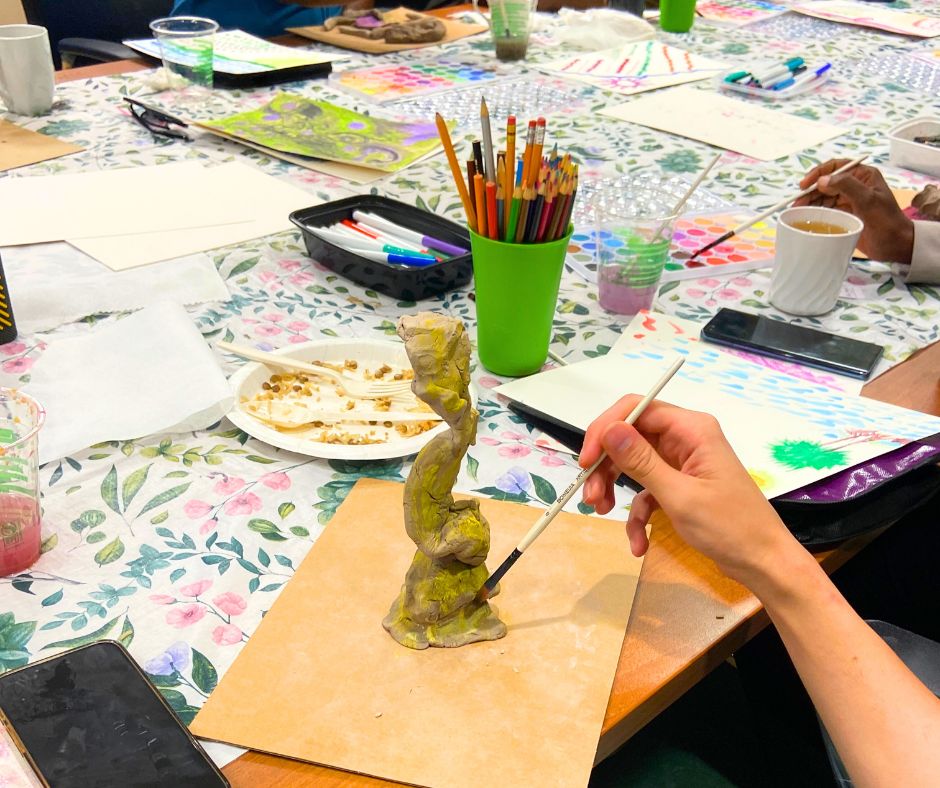
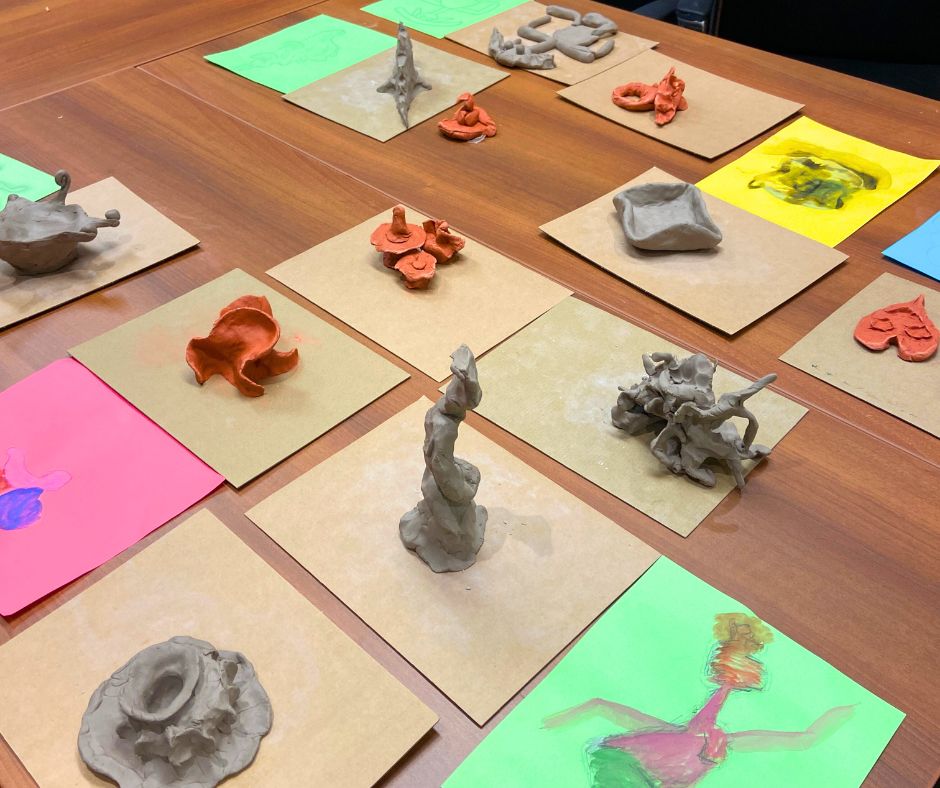
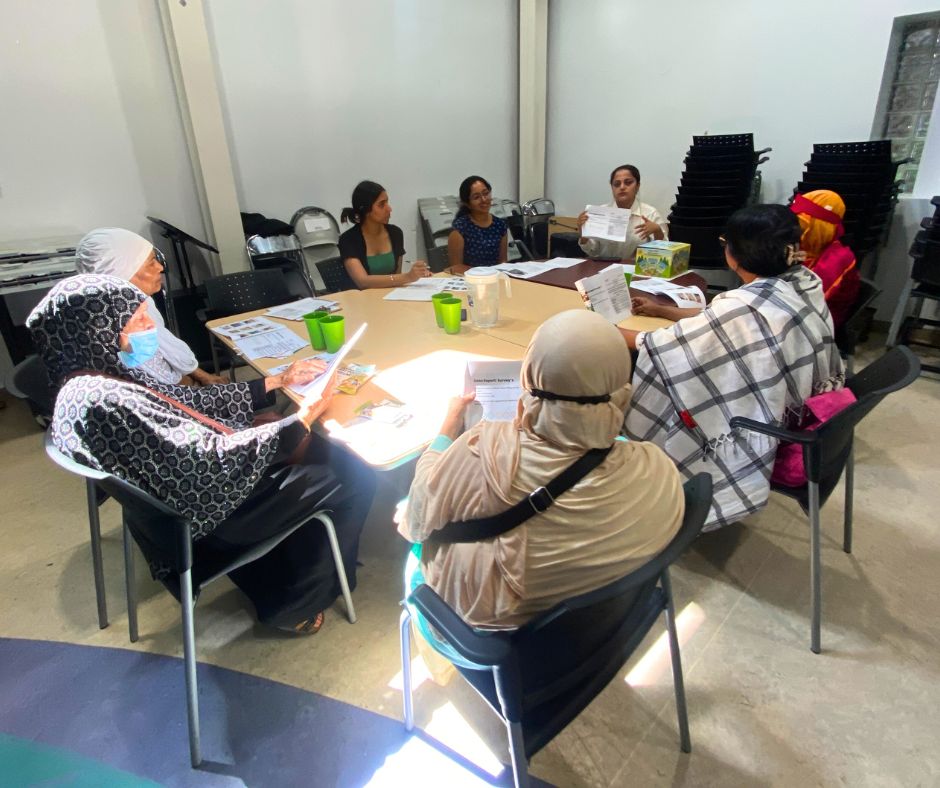
Hubs of Expressive Arts for Life (HEAL) project worked alongside newcomer women survivors of gender-based domestic violence (GBDV), using expressive arts as a foundational, trauma-informed approach to support mental health and wellbeing. Through a co-designed, 12-session expressive arts model led by Access Alliance Multicultural Health and Community Services, participants engaged in creative modalities that supported self-regulation, safety, and embodied awareness without requiring verbal disclosure. Grounded in culturally safe and community-based participatory research practices, HEAL positioned survivors as active collaborators and peer knowledge holders rather than passive recipients of care. By emphasizing choice, collaboration, and creativity, the project minimized re-traumatization while supporting healing, community, and interdisciplinary capacity. In this way, HEAL illustrates how trauma-informed expressive arts groups can respond to the complex realities of newcomer resettlement by fostering agency, belonging, and meaning-making alongside mental health support.
Five principles of trauma-informed practice & expressive arts
Trauma-informed practice can be understood through five core principles (Malchiodi, 2023; SAMHSA, 2021), each with direct relevance for newcomer mental health:
1. Knowing trauma: Trauma-informed care recognizes trauma as connected to many difficulties across the lifespan, including anxiety, depression, and emotional and physical distress (Malchiodi, 2023). Rather than focusing on diagnosis, trauma-informed programs are designed with the assumption that newcomers’ nervous systems have undergone tremendous and prolonged strain.
2. Mind–body experience: Trauma is shaped by both physiology and neurobiology (Malchiodi, 2023). Expressive arts are particularly effective, as they activate all the senses. Rhythm, painting, movement, image-making, and sound offer pathways to regulation that do not require someone to verbalize their trauma. This is especially important for newcomers who may not feel safe, ready, or able to speak about their experiences.
Demonstrating attuning to the mind and body
The HEAL program integrated activities that helped participant attune and make connections between their mind and body. Expressive art activities including clay, plasticene sculpting, dance ribbons, and traditional cultural dancing and movement helped to re-ground participants, offering creative pathways for self- and co-regulation.
During the first phase of the HEAL program, facilitators lead participants through psychoeducation, recognizing that healing requires an understanding of how trauma is held and expressed somatically, in the body. Using dance ribbons and music making, participants learn and actively embody regulation strategies, both individually and collectively. Many women reported that, although their external circumstances had not changed following the program, their outlook on their situations had become more positive and they were able to express themselves more.
This shift reflects a trauma-informed approach that prioritizes nervous system regulation, meaning-making, and embodied awareness. It demonstrates how expressive arts can support mental health without requiring verbal disclosure or immediate changes to lived conditions.
3. Adaptive coping vs. pathology: Many trauma-related symptoms are strategies that newcomers developed in order to survive. Frankl (1987) captured this concept particularly well: “[a]n abnormal reaction to an abnormal situation is normal behavior” (p. 20). Trauma-informed practice shifts the focus from pathology and toward understanding how responses such as numbing, avoidance, or anger were once used as protective strategies (Malchiodi, 2023). For newcomers, this reframing reduces the stigma surrounding mental health and increases their engagement. By contrast, pathologizing language can shut down engagement and hinder trust and progress.
4. Culturally informed collaboration: Trauma-informed work is characterized by collaboration and cultural responsiveness. It respects lived experiences, values, worldviews, and preferences, and may include collaboration with community supports such as faith leaders or community elders when appropriate and desired (Malchiodi, 2023).
5. From survival to thriving: Trauma-informed practice aims not only to reduce symptoms but also to support resilience and post-traumatic growth (Malchiodi, 2023). It focuses on expanding one’s capacity—not just tolerance—by fostering agency, curiosity, mastery, joy, and self-compassion alongside coping (Malchiodi, 2021). For newcomers, thriving may involve rebuilding their identity, developing practical skills, reconnecting with their community, restoring a sense of belonging, and reclaiming hope for the future.
Culturally tailored expressive arts
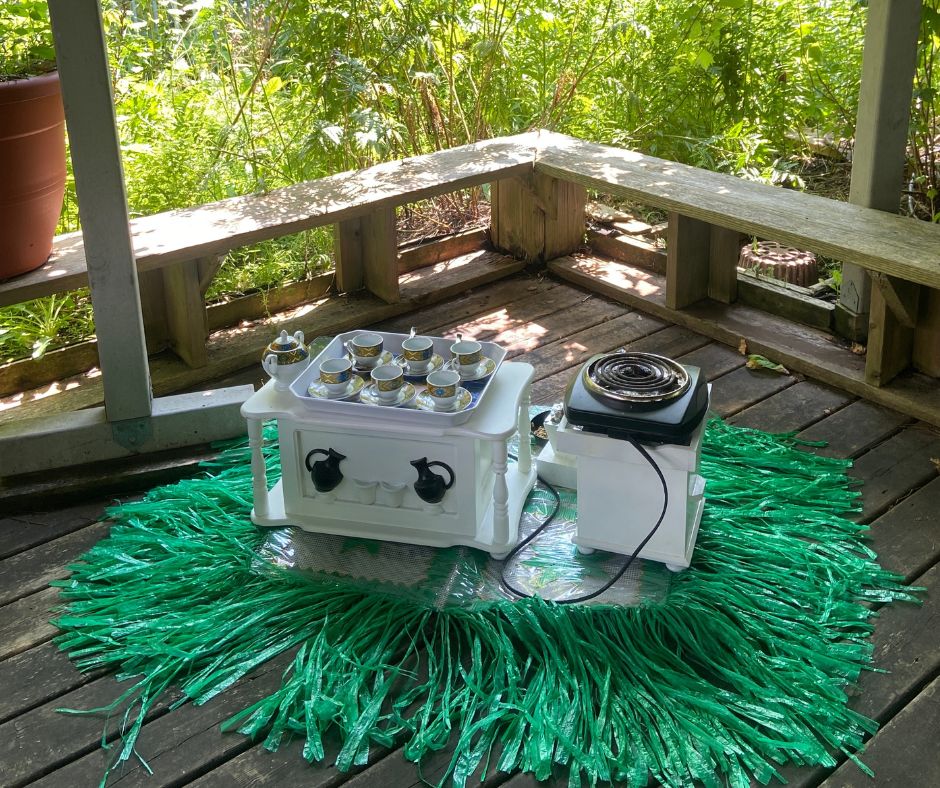
The HEAL project was created to address the shortage of culturally tailored GBDV resources and support for newcomer women. Many participants shared the need for spaces that reflected their cultural identities and lived realities. The program implemented cultural tailoring in the following ways: cultural refreshments, hiring facilitators with similar cultural and linguistic backgrounds, offering translation and interpretation, and inviting participants as consultants in shaping the program. In addition, participants engaged in mixed methods evaluations that collected insights on how the GBDV sector can intentionally include newcomer perspectives.
In conclusion, trauma-informed expressive arts groups provide culturally responsive supports for newcomer mental health and settlement. Programs like HEAL foster emotional regulation, belonging, and meaning-making, recognizing coping strategies as adaptive rather than pathological. By offering accessible, nonverbal pathways for healing, these approaches build resilience, self-efficacy, and post-traumatic growth, while strengthening community connection, cultural identity, and long-term capacity to thrive.
References
Frankl, V. E. (1987). Man’s search for meaning: An introduction to logotherapy. Beacon Press.
Malchiodi, C. A. (2020). Trauma and expressive arts therapy: Brain, body, and imagination in the healing process. Guilford Press.
Malchiodi, C. A. (2021, September 15). Traumatic stress and the circle of capacity. Psychology Today. https://www.psychologytoday.com/us/blog/arts-and-health/202109/traumatic-stress-and-the-circle-capacity
Malchiodi, C. A. (2023). Trauma‑informed expressive arts therapy. In C. A. Malchiodi (Ed.), Handbook of expressive arts therapy (pp. 142–154). The Guilford Press.
Substance Abuse and Mental Health Services Administration. (2021). Trauma-Informed care in behavioral health services (Treatment Improvement Protocol [TIP] Series 57). https://store.samhsa.gov/product/TIP-57-Trauma-Informed-Care-in-Behavioral-Health-Services/SMA14-4816