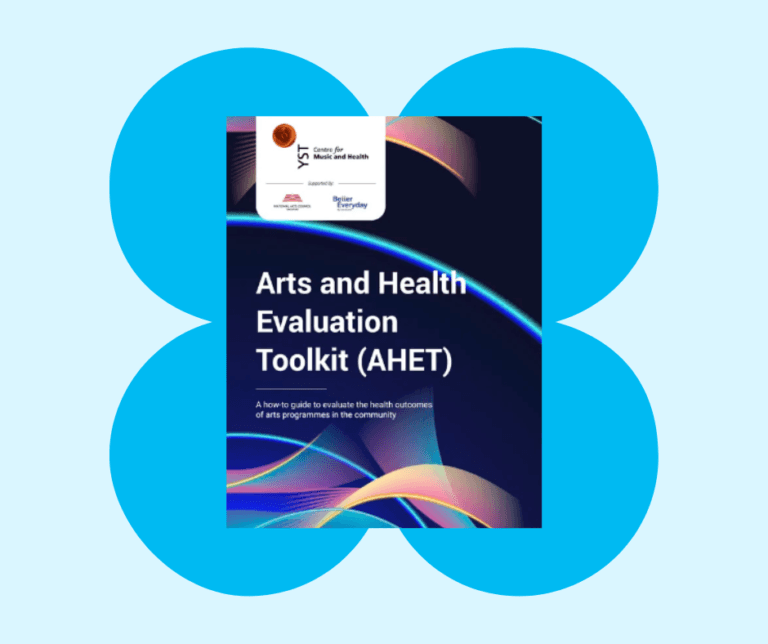
The arts and health evaluation toolkit (AHET) is a plain-language guide that helps artists, practitioners, and community organizations run structured, credible evaluations of arts and health programmes. It offers step-by-step guidance to measure and communicate health and well-being outcomes as expectations for evidence and impact reporting grow.
Special feature: Includes a structured guide for goal setting, choosing an evaluation design, and using validated quantitative measures aligned with public health and medical standards.
Clear and structured evaluation planning: Define realistic evaluation goals that align with programme objectives. Develop a clear framework for measuring short term and longer term outcomes.
Improved study design confidence: Select feasible study designs that match your setting, resources, and participant needs. Understand basic principles that strengthen rigour and reduce bias.
Use of validated measurement tools: Identify standardized quantitative instruments across domains such as mental health, wellbeing, social connection, and physical health. Improve consistency and comparability of findings.
Stronger evidence and methodological rigour: Apply more systematic approaches to outcome evaluation. Increase the reliability and credibility of reported results.
Greater confidence with funders and policy makers: Present findings in formats that align with public health and medical expectations. Support funding applications and reporting requirements with stronger data.
Accessible evaluation for practitioners: Build practical evaluation skills without requiring advanced academic training. Make outcome measurement more approachable and integrated into everyday practice.