The HEAL glossary is a practical resource for service providers supporting newcomer survivors, linking expressive arts, trauma-informed care, and healing.
The findings highlight trauma-informed expressive arts interventions improved well-being, strengthened coping skills, and increased knowledge, confidence, and safety among newcomer survivors of domestic and family violence.
These co-design reports capture the collaborative activities, expert insights, and community-informed processes that shaped the development of the HEAL 12-session expressive arts program.
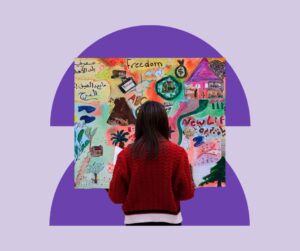
Two gallery booklets showcase 12 collective paintings created through the HEAL Project. Each booklet features images and descriptions to learn more about participants journeys through the HEAL Program.
These reports present key findings from the HEAL Project’s work with five participant groups: Arabic, Bengali, Farsi, Tigrinya & those will shelter experiences, and 2LGBTQI+ identifying women.
The post-program resources and tools are designed to assess the long-term impact of the HEAL Program and support sustained engagement with expressive arts.
The HEAL Project pre-program tools provide a comprehensive foundation to prepare peer researchers, facilitators, and service providers to deliver the HEAL Program safely, ethically, and effectively.