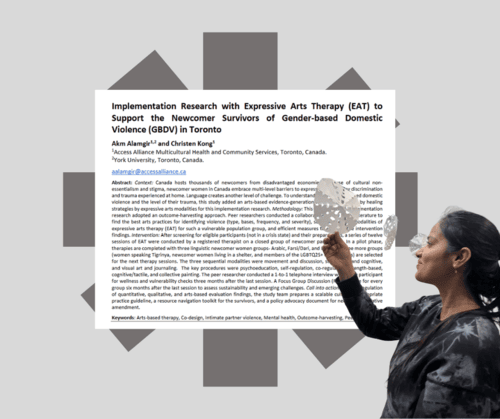
This research paper explores how newcomer women in Toronto, of specific linguistic and social identity backgrounds, encounter unique and unspoken challenges related to domestic violence and trauma. By using expressive arts as both a healing and research implementation tool, this study highlights social and systemic barriers such as stigma, language, and culturally appropriate services that often overshadow the trauma recovery.
The participants of this study included women from newcomer communities in Canada. The study began with three linguistic groups, Arabic, Farsi/Dari, and Bengali-speaking women. Later expanded to include Tigrinya-speaking women, women living in shelters, and LGBTQ2S+ newcomer women.
Methodology
A mixed-method design was implemented and used a process called outcome harvesting to assess the impact. The study incorporated:
Expressive arts therapy
Art modalities
Support measures
Follow-ups
Key findings
The research study is still ongoing, however early findings show:
Expressive arts provides a safe and non-verbal outlet for processing trauma.
Group settings help build trust, connection, and self-regulation.
Women reported increased emotional clarity and a stronger sense of resilience.
Participants expressed the need for more culturally and linguistically accessible support services.
Why does it matter?
This research documents trauma, actively works toward healing, and systemic change. The results of this study are being used to develop:
A scalable, culturally safe guideline for expressive arts-based trauma care.
A resource toolkit for supporting survivors.
A policy advocacy paper to push for legislative change to address domestic violence among newcomers.