Embroidery and Syrian refugees exploring loss and hope
Date: December 15, 2020
Author(s): Alexandra Hanania
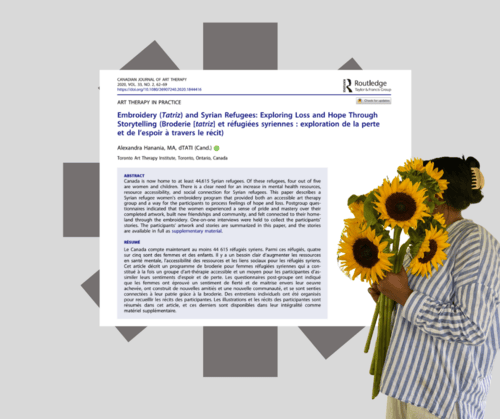
This paper examines an art therapy embroidery program for Syrian refugee women in Toronto. Using Tatriz, the group offered a culturally familiar way for participants to explore feelings of loss, hope, and identity. The study shows how embroidery helped the women express their stories, connect with their past, and build community.
The research focuses on Arabic-speaking refugee women resettled in Canada. It is directed toward art therapists, mental health practitioners, community workers, and researchers interested in culturally informed approaches with newcomer populations.
Methodology
This study used a mixed, culturally responsive approach that includes:
12-week embroidery-based art therapy group
Pre- and Post group questionnaires
Individual interviews documenting participants’ stories and artwork
Use of interpreters, translated materials, transportation support, and a women-only space to ensure accessibility
Key findings
The research highlights several themes and outcomes:
Participants gained a sense of community, support, and decreased loneliness.
Embroidery fostered pride, mastery, and cultural connection.
Themes such as home, loss, resilience, war, and dreams for the future appeared throughout the artwork.
Symbolic motifs—flowers, monuments, trees, Arabic script—helped women express identity and memory.
Why does it matter?
This study shows the therapeutic impact of culturally meaningful art-making for refugee women:
Provides safe spaces for storytelling and emotional expression.
Strengthens cultural identity during resettlement.
Addresses gaps in mental health support for Syrian refugee adults.
Encourages community building and reduces social isolation.