Drawing on Access Alliance’s two decades of experience in arts-based practices, our team has developed a model to enhance newcomer mental health through the arts.
Hiring art based facilitators are essential for the sustainability for expressive art programs, read more on how to hiring an art based facilitator for your organization.
Implementing arts-based activities takes thoughtfulness and intention, read more about tips and tricks our teams have collected to improve art workshops, programs, and events.
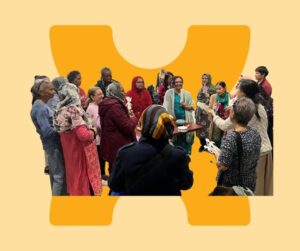
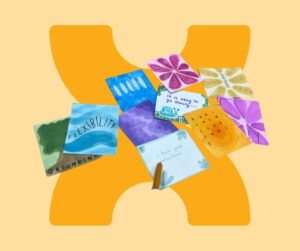
Implementing artful check in and outs during programs can quickly breakdown barriers, bring laughter and enthusiasm for group gatherings, and provide a platform for trust building.
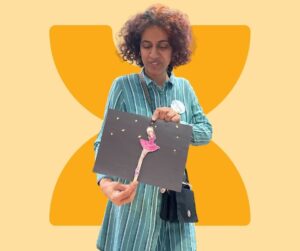
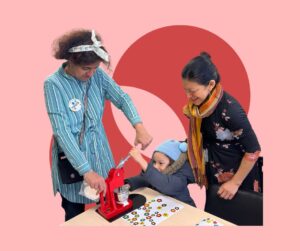
Button-making builds community through creativity while sharing key information. It sparks conversation, supports self-expression, and spreads messages beyond the space through wearable, community-made buttons.
This session focuses on understanding the mind-body connection, helping participants recognize how stress affects the body and teaching eight practical techniques to manage it effectively.
This session provides newcomers with essential information and practical tools to cultivate self-compassion, supporting their adjustment to a new environment and helping them manage the stresses of resettlement.
This session focuses on boundary identification, reinforcement, and expression. Having boundaries helps us to strengthen our relationships within our community.