The DEPICT model for participatory qualitative health promotion research
Date: January 12, 2014
Author(s): Sarah Flicker, Stephanie A. Nixon
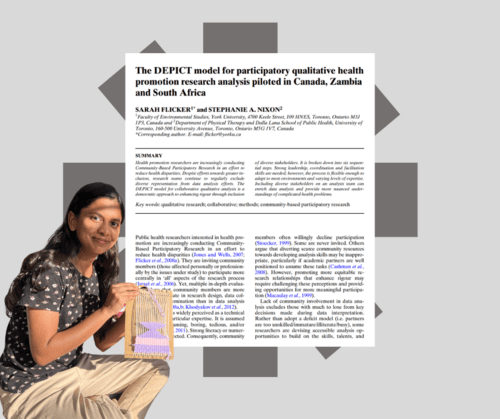
The DEPICT model is a participatory approach designed to make qualitative data analysis in health promotion research more inclusive and accessible to diverse stakeholders. The research model emphasizes the active involvement of diverse stakeholders, including community members, service providers, and academic researchers, in analyzing qualitative data. The goal is to improve the relevance, rigor and accessibility of health research by incorporating a range of perspectives.
The DECPICT model engages multiple stakeholders in health promotion research to foster collaboration at every stage of data analysis. Community members, researchers, service providers, policy makers, and marginalized populations are some of those who the model is targeted to. The research focuses on ensuring that these groups are meaningfully engaged and can learn from one another.
Methodology
The research study used a multi-step, participatory process to create the model for qualitative data analysis:
Participatory coding
Inclusive reviewing and summarizing
Collaborative analyzing
Knowledge translation
Key findings
The key findings from the implementation for the DEPICT model include:
The involvement of diverse and multiple stakeholders in the analysis process increased the rigor and transparency of research findings.
The involvement of community members ensures that the research is more relevant to the populations it seeks to serve.
An increase in skill building and empowerment among those who engaged in the research process, which further benefited professional and personal development.
Contributed to health policy changes, community programming, and advocacy campaigns.
Why does it matter?
The DEPICT model fosters an inclusive, collaborative, and transparent research process, which further:
Enhances the relevance of research by ensuring those affected by health issues are involved.
Promotes capacity building and empowerment in community members and researchers.
Providers a framework for translating research into action to have a tangible impact.