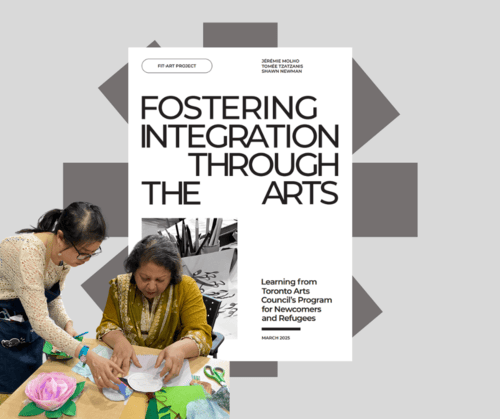
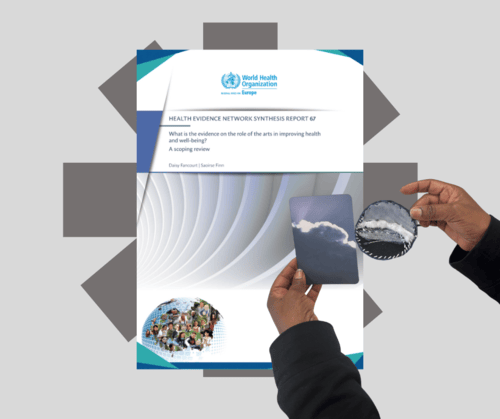
This research investigates how arts-based programs can support the integration and empowerment of newcomers and refugees in Toronto. The report evaluates Toronto Arts Council’s (TAC) program for newcomers and refugees and how targeted arts funding and mentorship helps overcome personal and system barriers.
This study centers on newcomer and refugee artists in Toronto, many of whom face exclusion from the local creative economy due to systemic barriers, such as non-recognition of foreign credentials. The report also includes voices and experience from focus groups, grant recipients and partner organizations.
Methodology
The research used a one-year mixed methods study, including:
Analysis of program and grant data from TAC
Four focus groups with artists and arts/settlement organizations
Film-based research with in-depth interviews
Executive interviews and a stakeholder policy workshop
Key findings
The report findings reported on three sections, arts and settlement, empowering artists, and systemic barriers.
Arts and settlement:
Artistic expression fosters a sense of belonging and more.
Arts-based spaces offer culturally sensitive settings for language learning and more.
Empowering artists:
Mentorship and grants help artists navigate career pathways, gain recognitions, and access local networks.
Provide creative platforms for sharing migrations narratives and transforming trauma into agency.
Systemic Barriers:
Many artists face exclusion due to need for Canadian experience, underemployment, and precarious work.
Barriers include project-based funding limitations, biases in grant selection, and non-recognition of international qualifications.
Why does it matter?
The report emphasizes the importance of integrating arts into settlement policy and urges funders, institutions, and governments to:
Enhance cross-sector collaboration between arts and settlement organizations.
Support sustainable funding models by prioritizing multi-year grants.
Address systemic barriers by recognizing international experience and embracing non-Western artistic practices.