Capacity building, HEAL Resources

Creative pathways learning course

What is Creative Pathways? 

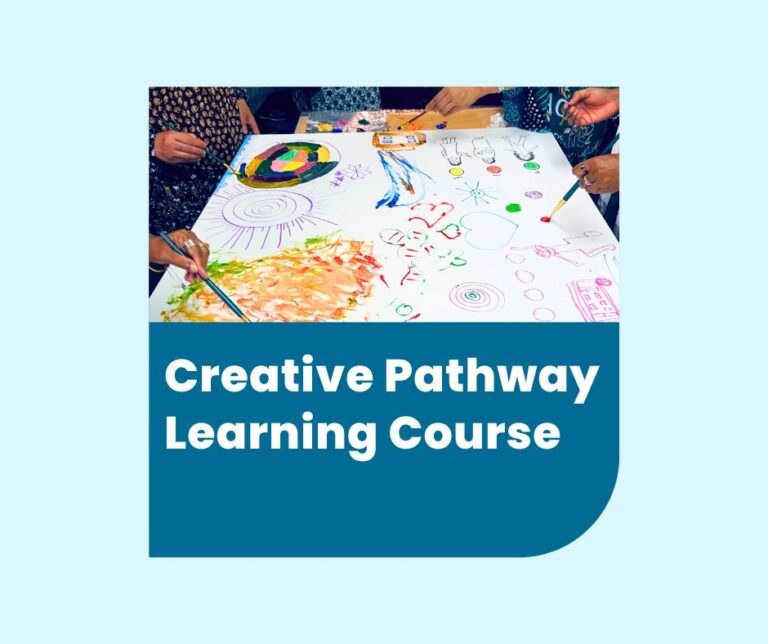
The course introduces expressive arts as an effective intervention for mental health and wellbeing, while focusing on specific benefits for newcomers individuals and their families. The course provides introductory knowledge about expressive arts for newcomer individuals and communities with experience of trauma and violence.

Informed by findings from Access Alliance’s Hubs of Expressive Arts for Life (HEAL) Project, the course offers comprehensive training on how to implement an expressive arts program for newcomer individuals and their communities. The training is for healthcare, settlement, and art facilitators, across the country, who work alongside newcomers with experiences of trauma, focused on survivors of GBDV. 

Who should take this course?

  • Leaders and frontline professionals in settlement and anti-violence organizations who want to strengthen their capacity to support clients who have experienced violence, particularly newcomers, immigrants, and refugees, using culturally responsive and trauma-informed approaches.
  • Health care professionals and service providers working with newcomers, immigrants, and refugees who want to deepen their understanding of gender-based violence and improve how they recognize and respond to it in clinical or community settings.
  • Art-based facilitators, expressive arts practitioners, and community arts leaders who wish to integrate trauma-informed and culturally responsive approaches when working with individuals and communities impacted by violence.
  • Other professionals and practitioners working in community services, social support, education, or related sectors who want to build knowledge about gender-based violence affecting newcomer, immigrant, and refugee communities.

What are the course learning outcomes?

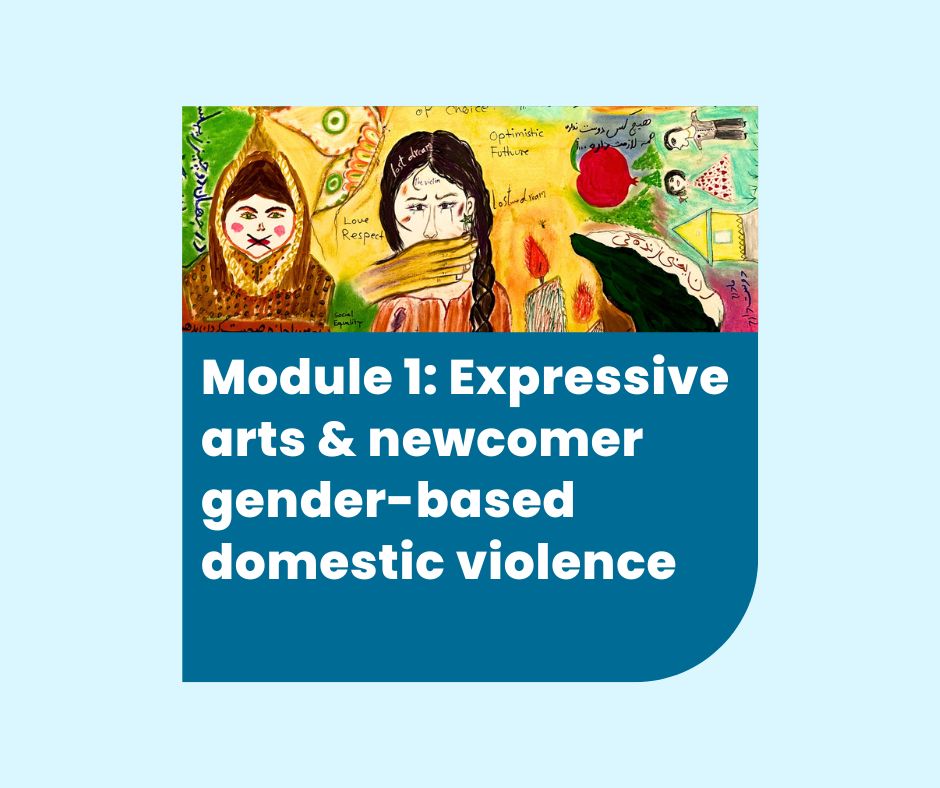
  1. Understand gender-based domestic violence (GBDV) and explore how newcomer, immigrant, and refugee experiences shape vulnerability, barriers to support, and pathways to healing.
  2. Examine the role of expressive arts interventions in supporting survivors of GBDV and understand the importance of collaborative, community-based approaches such as “building a nest together.”
  3. Develop practical strategies for program implementation, including partnership development, facilitation team building, outreach and recruitment, participant screening, and readiness for trauma-informed group work.
  4. Describe the structure and components of the HEAL program, including the stages of Safety and Stabilization, Identity, Culture and Community, and Building Resilience, Hope, and Future.
  5. Understand mixed-methods evaluation approaches used in expressive arts and community-based programs, including quantitative and qualitative data collection and interpretation.
  6. Identify best practices and strategies for sustainability, including insights from facilitator field notes, participant support, organizational capacity, policy considerations, and actions to sustain and expand the work.

Access Module 1

Access Module 2

Access Module 3

Access Module 4

Access Module 5

Access Module 6

How does the course work?

Creative Pathways is a self-directed course made up of 6 modules. The modules will engage you in several topics related to GBDV and the arts, through participatory activities, videos, and additional resources. Each module will take approximately 1 – 1.5 hrs. to complete. 

The course provides you with a pathway to improve newcomer mental health and health. It is founded on evidence-based practice, co-creation, participants’ experience and feedback, and facilitator feedback in the HEAL project. It will increase your capacity as a practitioner to integrate art and artfulness in your practice, and to increase connection with your clients and organization.  

Acknowledgements 

Creative Pathways is funded by the Public Health Agency of Canada (PHAC) to prevent and address family violence in partnership with six implementation agencies including Arab Community Centre of Toronto (ACCT), Canadian-Bangladeshi Community Services (BCS), Toronto Neighbourhood Group (TNG), Sherbourne Health, Art + Health, and the Barbra Schlifer Commemorative Clinic. Curriculum developed by the HEAL project team. 

Questions? Contact: arts@accessalliance.ca 

Facilitated Training Booking